1921 · Toronto
Banting and Best, a 22-year-old student, discover insulin at the University of Toronto.
Free, mentor-led research opportunities for high school students in Canada and beyond, all online. Learn the craft, then compete in Toronto this winter.
The Symposium · Winter 2027 · Downtown Toronto
Researchers at these institutions have advised us, sat down for an interview, or mentored students directly. Several of those conversations are still going.
Advice, interviews, and mentorship from


And elsewhere in the network




Backgrounds in the group include work at




Every researcher started exactly where you are. Follow the firefly trail, one waypoint at a time.
Discover
Twelve research pathways across STEM and social science, from biology and computer science to psychology and public policy. Start where your questions already live.
Learn
Research 101 is a free four-week online course built by university mentors. Work through twenty lessons with short videos at your own pace, and leave with a research proposal of your own and written feedback on it, ready to lead or join real projects.
Compete
The Symposium brings high school and university researchers to downtown Toronto for cash prizes, publication opportunities, and internships.
Beyond
A free interview series with working researchers and deeper paid resources are on the way. Be first to hear when they land.
Every landmark below started with someone asking a question. Yours counts too.
1921 · Toronto
Banting and Best, a 22-year-old student, discover insulin at the University of Toronto.
1953 · Cambridge
Watson, Crick, and Franklin's data reveal the double helix of DNA.
1969 · The Moon
Apollo 11 lands. Behind the small step: years of research by thousands of people.
Students helped through workshops, library events, and mentor sessions. Across five provinces and two U.S. states.
Sessions have been led by MIT mentors, professors at Princeton and Queen's University, a TMU professor, a biology PhD candidate, and a Western University medical student.
Covered in AuroraToday (opens in a new tab), The Auroran (opens in a new tab), and NewmarketToday (opens in a new tab).
Two Nobel laureates and a Fields medalist have given their time to our students, through Researcher Interviews, our free series, and a live talk at Speaker Day. Same questions any student would ask, answered by people who have gone as far as the work goes.
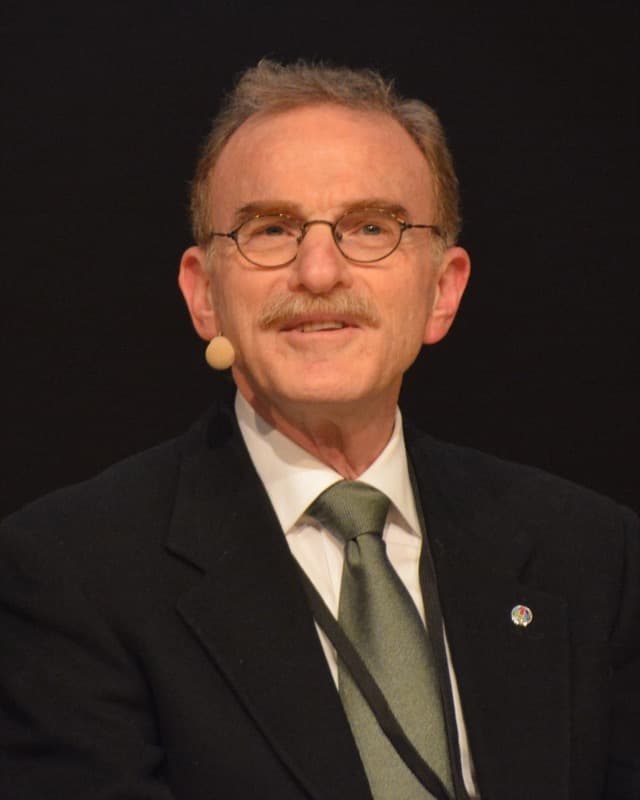
Nobel Laureate
Professor of Molecular and Cell Biology, UC Berkeley
Nobel Prize in Physiology or Medicine, 2013
For uncovering the machinery that routes molecular cargo inside every living cell.
What we are asking: How a question about yeast cells turned into a discovery that changed medicine.
About the Nobel Prize in Physiology or Medicine (opens in a new tab)
Recorded · Publishing soon
Photo: Bengt Oberger, CC BY-SA 4.0, via Wikimedia Commons. Cropped and resized.
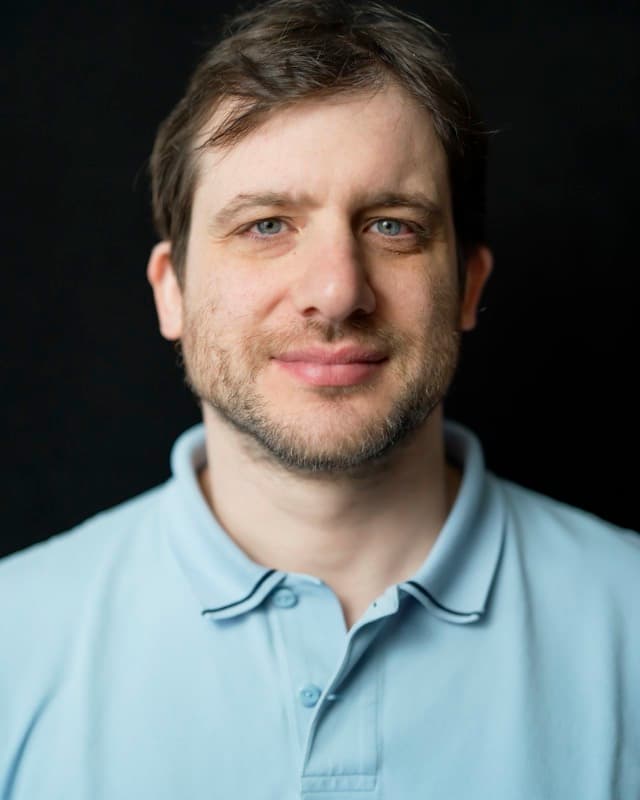
Fields Medalist
Professor of Mathematics, University of Toronto
Fields Medal, 2026
For work in number theory including a proof of the André-Oort conjecture, open for decades.
What we are asking: What it takes to stay with one problem for years, and how to know a question is worth it.
About the Fields Medal (opens in a new tab)
Recorded · Publishing soon
Photo: Simons Foundation, CC BY 4.0, via Wikimedia Commons. Cropped and resized.
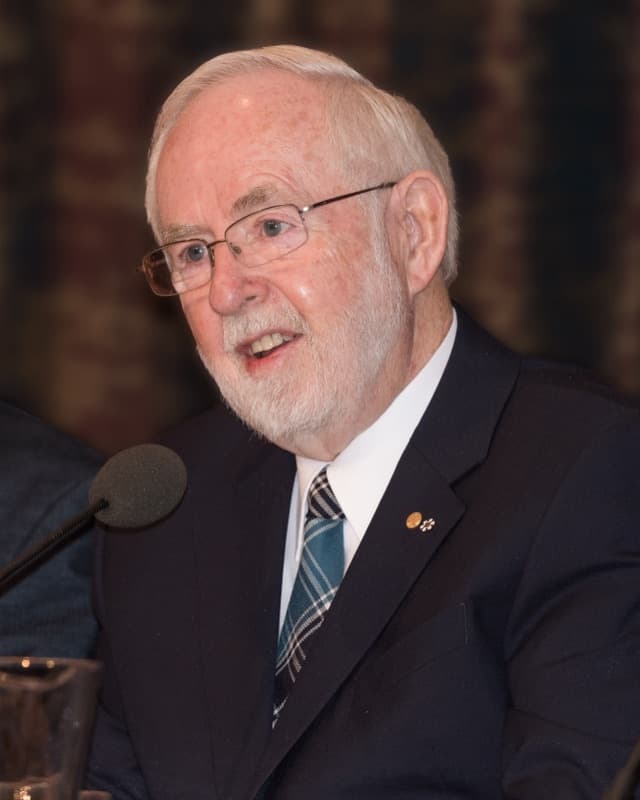
Nobel Laureate
Professor Emeritus of Physics, Queen's University
Nobel Prize in Physics, 2015
For the discovery of neutrino oscillations, which shows that neutrinos have mass.
What he told our students: How a detector two kilometres down a Sudbury nickel mine solved the solar neutrino problem, and what dark matter and dark energy leave for the next generation to find.
About the Nobel Prize in Physics (opens in a new tab)
Live talk · Sep 10, 2026
Photo: Bengt Nyman, CC BY-SA 4.0, via Wikimedia Commons. Cropped and resized.
Research 101 is our flagship: a free four-week online course for high school students, built by university mentors. We also run field workshops, community events, and The Symposium, Canada's biggest student research competition, in Winter 2027.
Start with a structured program. Research 101 takes you from zero experience to proficient enough to lead or join real research projects in four weeks. It is free, online and self-paced, and there is no application.
University mentors, not staff reading from a deck, including professors at Princeton and Queen's University. Beyond the people who teach, researchers at MIT, UC Berkeley, the University of Pennsylvania, the University of Toronto, Western University, York University, and Toronto Metropolitan University have advised us, sat down for interviews, or mentored students directly. They teach the fields they actually work in.
Yes. The Auroran covered how the club grew from its October 2025 founding to more than 300 students across five provinces and two U.S. states. NewmarketToday covered the move from in-person sessions at Aurora Public Library to free online workshops open to students anywhere. AuroraToday reported that the summer 2026 run of Research 101 drew 371 registrations worldwide.
Yes. Arthur B. McDonald, the Canadian physicist who shared the 2015 Nobel Prize in Physics for showing that neutrinos have mass, gave Research 101 students a live talk and took their questions at Speaker Day in September 2026. Our free Researcher Interviews series also recorded sit-downs this summer with Randy Schekman, who won the 2013 Nobel Prize in Physiology or Medicine at UC Berkeley, and Jacob Tsimerman, who won the 2026 Fields Medal at the University of Toronto. Both episodes are publishing soon and are free to watch, with no registration required.
Registration is closed for now. The next cohort starts November 9, and registration reopens before then. There is no waitlist between cohorts. Leave your email on the register page and you will hear the moment registration opens, before it is announced publicly.
Yes, 100% free. There is no registration fee and no cost during the program. Our workshops and community events are free too.
Research 101 runs fully online, so students can join from anywhere in the world, not just Canada. It is fully asynchronous: self-paced online lessons with short videos. There are no live sessions to attend and no camera to turn on, so you can work through it whenever suits you, from any time zone. The Symposium is in person in downtown Toronto in Winter 2027.
Yes. Research 101 is an online course, and students outside Canada, including the US, are welcome. It is self-paced with no live sessions, so time zones do not matter.
No. There is no application. Places are first come, first served, so register as soon as registration opens.
No. Every program is built for students starting from zero, including students who have never set foot in a lab.
Yes. Research 101 runs online for students across Canada and around the world, including Toronto, the GTA, Ontario, Vancouver, and the US. It is self-paced, so you can fit it around school wherever you are. The Symposium is in person in downtown Toronto.
STEM pathways like biology, chemistry, physics, engineering, computer science, mathematics, health sciences, and environmental science, plus social science pathways like psychology, economics, sociology, and public policy.
Registration is closed for now. The next cohort starts November 9, and registration reopens before then. When it opens, it takes about two minutes on our register page: five quick steps, a researcher profile, and you are in. Leave your email there now and you will hear first.
Compete at The Symposium in Winter 2027, take what you learned into real projects, or keep going with our upcoming researcher interview series and resources.
Yes. A small crew of university students, graduate students, researchers, and educators runs every season. The application on our mentors page takes a few minutes, and every one gets read.
Weighing your options? We wrote up all seven research opportunities for high school students, compared by cost and difficulty, including the routes we do not run.
Registration is closed for now. The next cohort starts November 9, and registration reopens before then. The Symposium follows in downtown Toronto, Winter 2027.
Research 101
Free · Online · No experience needed